| 08:30 – 08:35 |
Opening |
Opening & Welcome Remarks
|
| 08:35 – 09:05 |
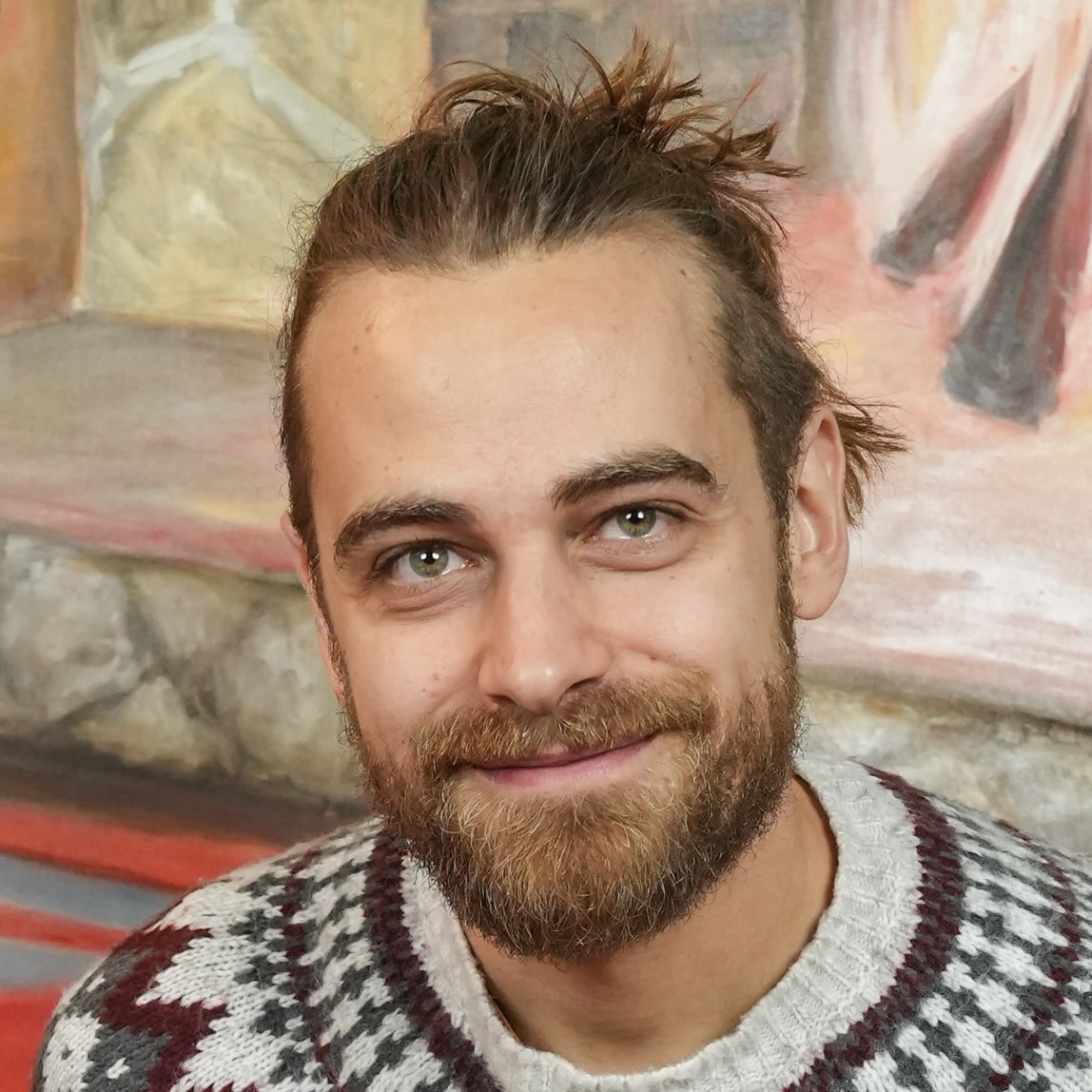
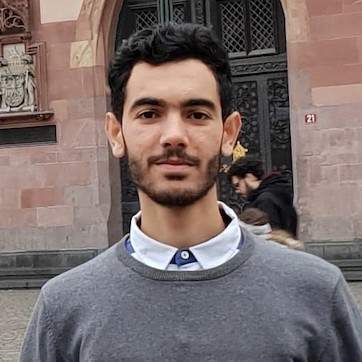
Keynote Speaker |
Federico Bolelli
University of Modena and Reggio Emilia, Italy
|
| 09:05 – 09:15 |
|
Generating 3D baby faces from limited data
M. Zappe, A. Alomar, M. G. Linguraru, G. Piella, F. Sukno
|
| 09:15 – 09:25 |
|
Constraint-Aware Self-Supervised Pretraining for Label-Efficient Left Ventricle Segmentation in SPECT MPI
J. Berjawi, C. Cérin, L. Riou
|
| 09:25 – 09:35 |
|
Evidence-Based Text-Conditioned 3D CT Synthesis for Ovarian Cancer
F. P. Panaccione, E. Lomurno, F. Fati, C. Pecchiari, M. N. Rosanu, L. De Vitis, L. Ribero, G. Petralia, G. Schivardi, G. D. Aletti, N. Colombo, M. F. Spadea, F. Multinu, M. Matteucci, E. De Momi
|
| 09:35 – 09:45 |
|
Toward CT-Free 3D Cephalometric Landmark Estimation Using MediaPipe Face Landmarker
K. Saita, T. Abe, M. Noda, C. Tachiki, Y. Nishii, H. Saito
|
| 09:45 – 09:55 |
|
Structural-Functional Integration for Enhanced Detection of Subtle Epileptogenic Lesions: A Region-Localized, Clinically-Informed Multimodal EEG-MRI Framework
S. S. Subramanian
|
| 09:55 – 09:58 |
|
MedPCFM: Improving Medical Point Cloud Completion by Integrating Point Transformers and Flow Matching
K. Kwarciak, M. Wodzinski
|
| 09:58 – 10:01 |
|
Jolia: Concept-Level Vision-Language Alignment for 3D CT Contrastive Learning
J. Khlaut, C. Corbière, B. Callard, A. Prat, L. Butsanets, A. Saporta, T. Danielou, L. Machado, K. Le Floch, T. Boeken, P. Manceron, C. Dancette
|
| 10:01 – 10:04 |
|
Curia-2: Scaling Self-Supervised Learning for Radiology Foundation Models
A. Saporta, B. Callard, C. Dancette, J. Khlaut, C. Corbière, L. Butsanets, A. Prat, P. Manceron
|
| 10:04 – 10:07 |
|
Curia-MAE: Multi-Modal Multi-Anatomy MAE Pre-Training for 3D Medical Image Segmentation
T. Danielou, A. Saporta, L. Alberge, C. Dancette
|
| 10:07 – 10:10 |
|
YOLO-PVC: 2D-to-3D Consolidation of Slice-wise Detections for Volumetric Liver Tumor Localization in MRI
T. Waqas, M. Lahlouh, K. Taibouni, M. Waqas, S. Ahmed, S. Mulé, Y. Leroul Chenoune
|
| 10:10 – 10:13 |
|
How Close Is Gaussian Splatting to the Clinic?
K. De
|
| 10:13 – 10:16 |
|
Surface-to-Skeleton 3D Cephalometry: Estimating Hidden Skeletal Landmarks from CT-Derived External Soft-Tissue Surfaces
T. Abe, T. Kanaya, K. Saita, M. Noda, C. Tachiki, Y. Nishii, H. Saito
|
| 10:16 – 10:19 |
|
Do 3D Medical Foundation Models See Through MRI Artifacts? A Controlled Study of Representation Robustness
J. A. Mielcarz, D. Klaaby, M. Mehdipour Ghazi
|
| 10:19 – 10:22 |
|
A novel deformation-field framework for data augmentation of pathological fetal brain MRI
M. Benarafa, V. Zalevskyi, T. Sanchez, M. Bach Cuadra
|
| 10:22 – 10:25 |
|
Rendering Novel Views of MRI Using 3D Gaussian Splatting
R. Y. Park, M. C. Eid, R. Windsor, A. Jamaludin, A. Namburete, J. F. Henriques, A. Zisserman
|
| 10:25 – 10:28 |
|
TractoGraphVLM: A Unified Vision-Language Framework for White Matter Tractography
G. M. K. Kumar, J. D. Mendola, A. Shmuel
|
| 10:30 – 11:00 |
Break & Poster |
Coffee Break & Poster Session
|
| 11:00 – 11:30 |
Keynote Speaker |
Amine Ouasfi
INRIA, France
|
| 11:30 – 11:40 |
|
PRISM: Learning Priors for Robust Slice-to-Volume Registration in Ill-Posed Fetal MRI
V. Zalevskyi, T. Sanchez, M. Bach Cuadra
|
| 11:40 – 11:50 |
|
Learning Dense 2D-3D Correspondence for X-ray-to-CT Registration of Knee Bones
R. Daems, J. Grammens, C. Roten, A. Meyer, T. Luyckx, M. Verstraete
|
| 11:50 – 12:00 |
|
Confidence-Aware Teacher–Student Distillation for 3D Medical Segmentation
G. Triantafyllou, D. Iakovidis
|
| 12:00 – 12:10 |
|
Memory-Efficient Skip-Connection-Free 3D Autoencoder for Whole-Brain MRI Reconstruction
R. Srirambhatla, H. T. Karim, J.-Y. Campion
|
| 12:10 – 12:20 |
|
What Breaks Under Colonoscopy Artifacts? A Matched Benchmark of Appearance, Geometry, and Registrability in Gaussian-Splatting 3D Reconstruction
M. Golhar, N. J. Durr
|
| 12:20 – 12:30 |
Closing |
Closing Remarks
|