ECCV 2026  ·  Workshop

AI4M3D

Artificial Intelligence for Medical 3D Vision

September 9, 2026 8:30 AM - 12:30 AM

Workshop Overview

Medical 3D vision lies at the intersection of artificial intelligence, computer vision, computer graphics, and medical imaging. It is becoming increasingly crucial for diagnosis, surgical planning, simulation, and personalised healthcare.

Recent advances in deep learning, generative models, neural rendering, and vision-language approaches have enabled significant progress in 3D reconstruction, 3D generation, novel view synthesis, and the immersive visualization of medical data, including XR-supported applications. This also extends to neuroscience, with approaches that reconstruct 3D representations from neural data.

The goal of this workshop is to highlight innovative, AI-driven techniques for 3D vision in the medical field and encourage discussion about the unique challenges in this field, including data scarcity, noise, anatomical variability, robustness, interpretability, and clinical reliability.

This workshop aims not only to serve as a venue for presenting work in this area but also to build a community and share information in this new field.

Workshop Topics

We invite original, previously unpublished work addressing, but not limited to, the following topics:

AI for medical 3D reconstruction and neural rendering

  • 3D reconstruction from CT or MRI data
  • 3D Gaussian Splatting for medical scene understanding
  • Point cloud and mesh reconstruction for surgical planning
  • Real-time intraoperative 3D rendering
  • 4D dynamic reconstruction from medical images

Generative AI for medical and neural 3D data

  • 3D models generation from EEG or MRI data
  • 3D shape generation and completion for anatomy
  • Generative AI for 3D medical data synthesis
  • Neural data-driven 3D brain representation generation
  • Interactive 3D avatars for medical training

Vision-language models for 3D understanding

  • Language-promptable 3D segmentation for anatomical structures
  • Efficient 3D VLM architectures for volumetric data
  • Multi-modal 3D clinical reasoning and visual question answering
  • Zero-shot and few-shot 3D understanding via foundation VLMs

XR-supported visualization and simulation

  • Virtual overlays for intraoperative guidance
  • XR interfaces for medical education and surgical training
  • Collaborative multi-user XR for remote clinical consultation
  • AI-based rendering and scene understanding for XR

Foundation and self-supervised models for medical 3D vision

  • Self-supervised pretraining on 3D medical volumes
  • Universal anatomical segmentation with foundation models
  • Parameter-efficient fine-tuning for 3D clinical tasks with minimal labeled data
  • Continual and federated pretraining of 3D foundation models

Learning from sparse, noisy, or heterogeneous medical data

  • Semi-supervised and few-shot 3D segmentation with foundation model priors
  • Federated learning for multi-view 3D imaging
  • Uncertainty quantification for clinical deployment of 3D models
  • Label-efficient learning from noisy and partially annotated 3D medical data

Call for Papers

Submission Guidelines

  • All papers should be submitted at: Link
  • Papers must be prepared according to the ECCV Submission Guidelines. All papers will be reviewed by at least two reviewers with double-blind peer-review policy. Manuscripts must be submitted as PDF documents following the ECCV 2026 Submission Template.
  • Submissions are limited to 14 pages. Additional pages containing only cited references are allowed. Supplemental materials are also allowed, in PDF format.
  • Accepted papers will be published as part of the ECCV 2026 proceedings.
  • We also welcome papers previously submitted to other venues, but they will not be included in the conference proceedings.
  • Authors are further urged to consult ECCV 2026's ethics guidelines, recommended best practices, and FAQs.

Key Dates

Submission deadline Extended! July 10, 2026  July 17, 2026
Decision to authors August 3, 2026
Camera-ready deadline August 15, 2026
Workshop date September 9, 2026 AM

All deadlines at 23:59 Anywhere on Earth (AoE).

Invited Speakers

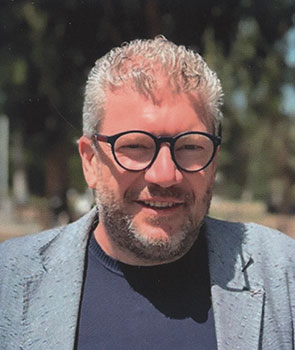
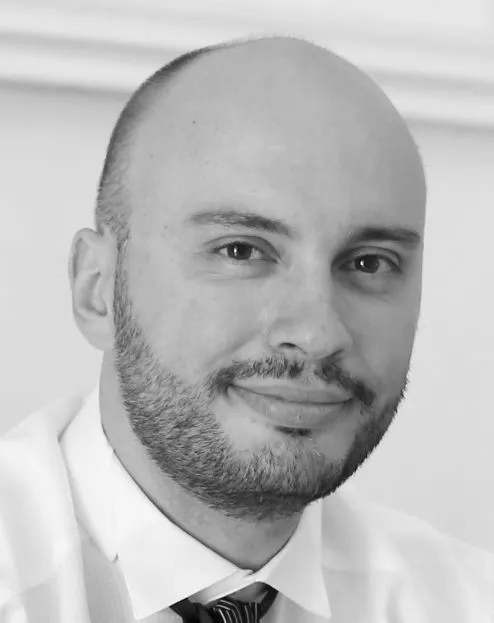
Federico Bolelli

Federico Bolelli

University of Modena and Reggio Emilia, Italy

Tenure-Track Assistant Professor at the University of Modena and Reggio Emilia, where he is part of the AImagelab research group. He earned his B.Sc. and M.Sc. degrees (cum laude) in Computer Engineering and completed his Ph.D. in ICT at the same university.

His research spans image processing, algorithm optimization, and medical imaging, including optimization of binary image processing on CPU/GPU, skin lesion segmentation for melanoma detection, CBCT maxillofacial segmentation, and whole-slide image analysis. He contributed to the H2020 DeepHealth project (co-leading the European Computer Vision Library, ECVL) and has been involved in the H2020 DECIDER project since 2022. Federico chairs the IAPR Technical Committee (TC22) on Reproducible Research and is a member of IEEE, MICCAI, and CVPL. He serves as Associate Editor for Pattern Recognition and Simulation & Game.

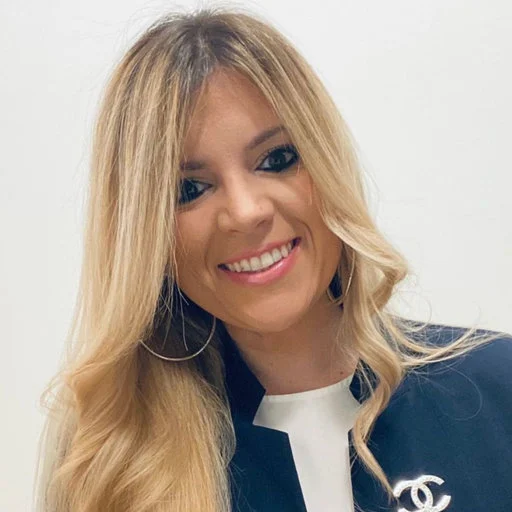
Amine Ouasfi

Amine Ouasfi

INRIA, France

Computer Vision PhD Student at INRIA, France, working with Prof. Adnane Boukhayma and Prof. Eric Marchand. His research focuses on deep learning for 3D reconstruction (creating virtual twins) and 3D generative AI.

He has worked on improving generalizable implicit reconstruction models and implicit representation learning from sparse inputs (point clouds, multi-view images). He is currently exploring how to improve the controllability of video generation for 3D-oriented tasks.

Organizing Committee

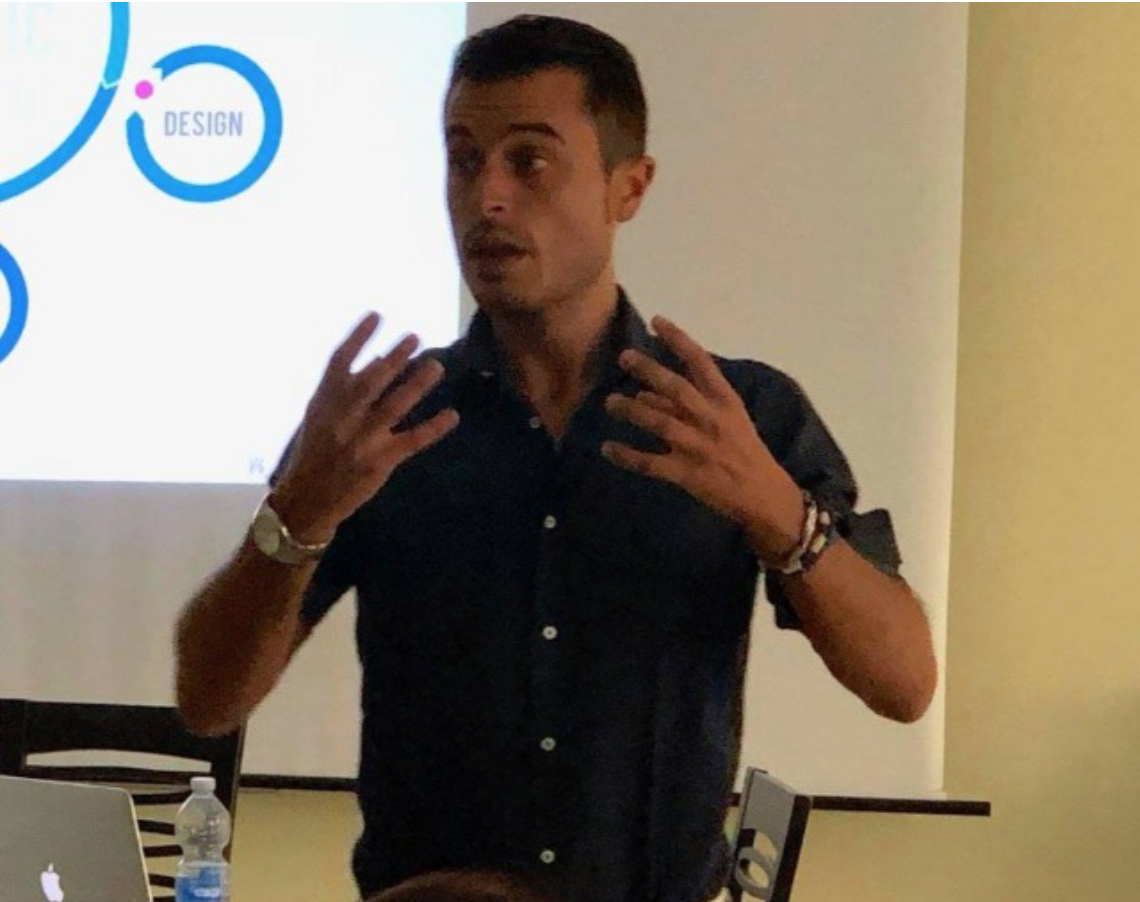
Emanuele Balloni

Emanuele Balloni

GAP Lab, Università Politecnica delle Marche, Italy

Pasquale Cascarano

Pasquale Cascarano

University of Bologna, Italy

Chu Chen

Chu Chen

University of Cambridge, UK

Paula Feldman

Paula Feldman

Weill Cornell Medicine, USA

Simon Graf

Simon Graf

University Medicine Halle (Saale), Germany

Emanuele Frontoni

Emanuele Frontoni

University of Macerata, Italy

Gustavo Marfia

Gustavo Marfia

University of Bologna, Italy

Marina Paolanti

Marina Paolanti

University of Macerata, Italy

Roberto Pierdicca

Roberto Pierdicca

GAP Lab, Università Politecnica delle Marche, Italy

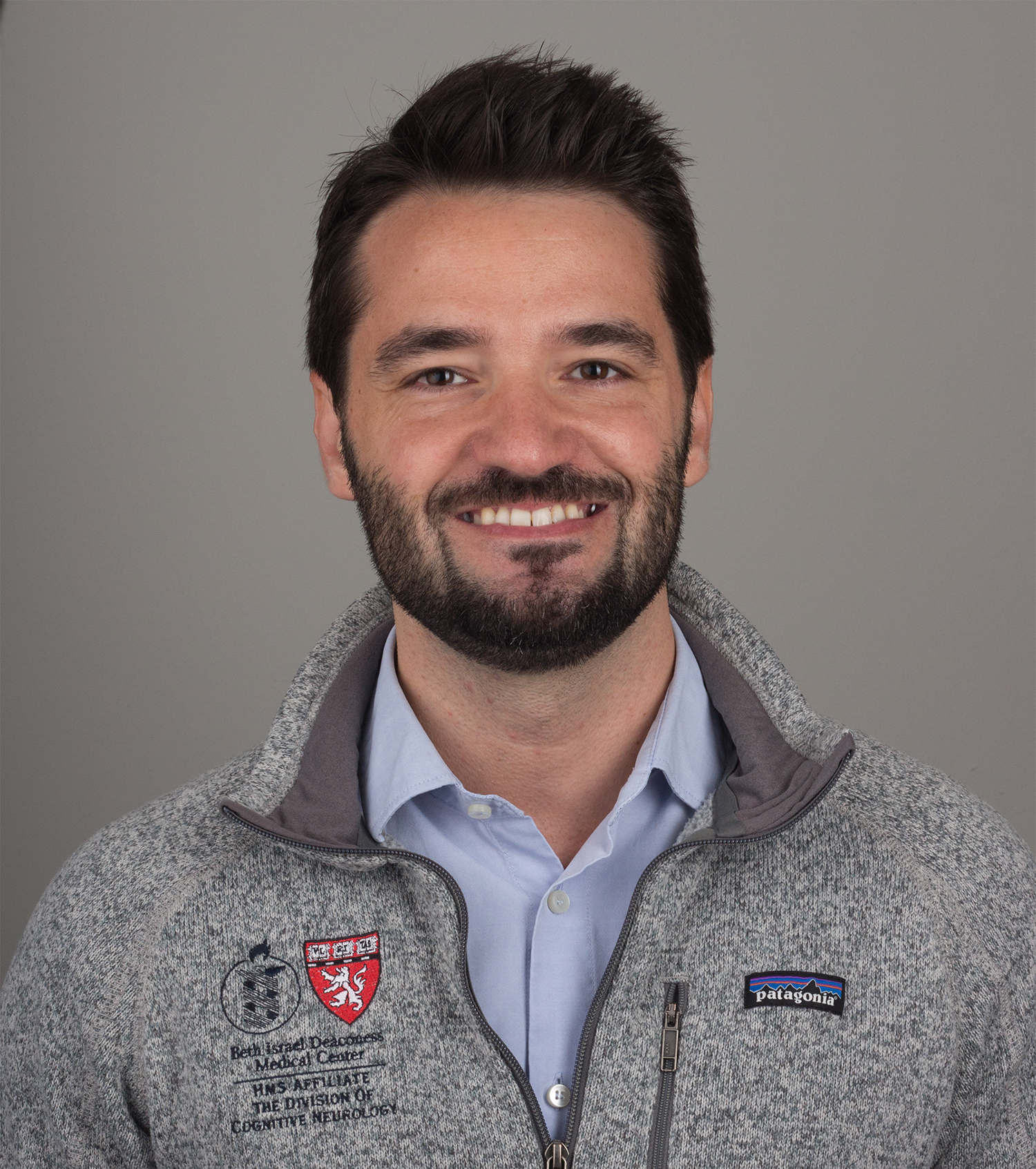
Emiliano Santarnecchi

Emiliano Santarnecchi

Harvard Medical School, USA

Workshop Schedule

September 9, 2026

8:30 AM - 12:30 AM

Time Session Details
08:30 – 08:35 Opening Opening & Welcome Remarks
08:35 – 09:05 Keynote Speaker Federico Bolelli University of Modena and Reggio Emilia, Italy
09:05 – 09:55 Oral Session Oral Session 1
09:05 – 09:15 Generating 3D baby faces from limited data M. Zappe, A. Alomar, M. G. Linguraru, G. Piella, F. Sukno
09:15 – 09:25 Constraint-Aware Self-Supervised Pretraining for Label-Efficient Left Ventricle Segmentation in SPECT MPI J. Berjawi, C. Cérin, L. Riou
09:25 – 09:35 Evidence-Based Text-Conditioned 3D CT Synthesis for Ovarian Cancer F. P. Panaccione, E. Lomurno, F. Fati, C. Pecchiari, M. N. Rosanu, L. De Vitis, L. Ribero, G. Petralia, G. Schivardi, G. D. Aletti, N. Colombo, M. F. Spadea, F. Multinu, M. Matteucci, E. De Momi
09:35 – 09:45 Toward CT-Free 3D Cephalometric Landmark Estimation Using MediaPipe Face Landmarker K. Saita, T. Abe, M. Noda, C. Tachiki, Y. Nishii, H. Saito
09:45 – 09:55 Structural-Functional Integration for Enhanced Detection of Subtle Epileptogenic Lesions: A Region-Localized, Clinically-Informed Multimodal EEG-MRI Framework S. S. Subramanian
09:55 – 10:30 Spotlight Spotlight Presentations
09:55 – 09:58 MedPCFM: Improving Medical Point Cloud Completion by Integrating Point Transformers and Flow Matching K. Kwarciak, M. Wodzinski
09:58 – 10:01 Jolia: Concept-Level Vision-Language Alignment for 3D CT Contrastive Learning J. Khlaut, C. Corbière, B. Callard, A. Prat, L. Butsanets, A. Saporta, T. Danielou, L. Machado, K. Le Floch, T. Boeken, P. Manceron, C. Dancette
10:01 – 10:04 Curia-2: Scaling Self-Supervised Learning for Radiology Foundation Models A. Saporta, B. Callard, C. Dancette, J. Khlaut, C. Corbière, L. Butsanets, A. Prat, P. Manceron
10:04 – 10:07 Curia-MAE: Multi-Modal Multi-Anatomy MAE Pre-Training for 3D Medical Image Segmentation T. Danielou, A. Saporta, L. Alberge, C. Dancette
10:07 – 10:10 YOLO-PVC: 2D-to-3D Consolidation of Slice-wise Detections for Volumetric Liver Tumor Localization in MRI T. Waqas, M. Lahlouh, K. Taibouni, M. Waqas, S. Ahmed, S. Mulé, Y. Leroul Chenoune
10:10 – 10:13 How Close Is Gaussian Splatting to the Clinic? K. De
10:13 – 10:16 Surface-to-Skeleton 3D Cephalometry: Estimating Hidden Skeletal Landmarks from CT-Derived External Soft-Tissue Surfaces T. Abe, T. Kanaya, K. Saita, M. Noda, C. Tachiki, Y. Nishii, H. Saito
10:16 – 10:19 Do 3D Medical Foundation Models See Through MRI Artifacts? A Controlled Study of Representation Robustness J. A. Mielcarz, D. Klaaby, M. Mehdipour Ghazi
10:19 – 10:22 A novel deformation-field framework for data augmentation of pathological fetal brain MRI M. Benarafa, V. Zalevskyi, T. Sanchez, M. Bach Cuadra
10:22 – 10:25 Rendering Novel Views of MRI Using 3D Gaussian Splatting R. Y. Park, M. C. Eid, R. Windsor, A. Jamaludin, A. Namburete, J. F. Henriques, A. Zisserman
10:25 – 10:28 TractoGraphVLM: A Unified Vision-Language Framework for White Matter Tractography G. M. K. Kumar, J. D. Mendola, A. Shmuel
10:30 – 11:00 Break & Poster Coffee Break & Poster Session
11:00 – 11:30 Keynote Speaker Amine Ouasfi INRIA, France
11:30 – 12:20 Oral Session Oral Session 2
11:30 – 11:40 PRISM: Learning Priors for Robust Slice-to-Volume Registration in Ill-Posed Fetal MRI V. Zalevskyi, T. Sanchez, M. Bach Cuadra
11:40 – 11:50 Learning Dense 2D-3D Correspondence for X-ray-to-CT Registration of Knee Bones R. Daems, J. Grammens, C. Roten, A. Meyer, T. Luyckx, M. Verstraete
11:50 – 12:00 Confidence-Aware Teacher–Student Distillation for 3D Medical Segmentation G. Triantafyllou, D. Iakovidis
12:00 – 12:10 Memory-Efficient Skip-Connection-Free 3D Autoencoder for Whole-Brain MRI Reconstruction R. Srirambhatla, H. T. Karim, J.-Y. Campion
12:10 – 12:20 What Breaks Under Colonoscopy Artifacts? A Matched Benchmark of Appearance, Geometry, and Registrability in Gaussian-Splatting 3D Reconstruction M. Golhar, N. J. Durr
12:20 – 12:30 Closing Closing Remarks